
The gap nobody talks about, and why that's not the problem
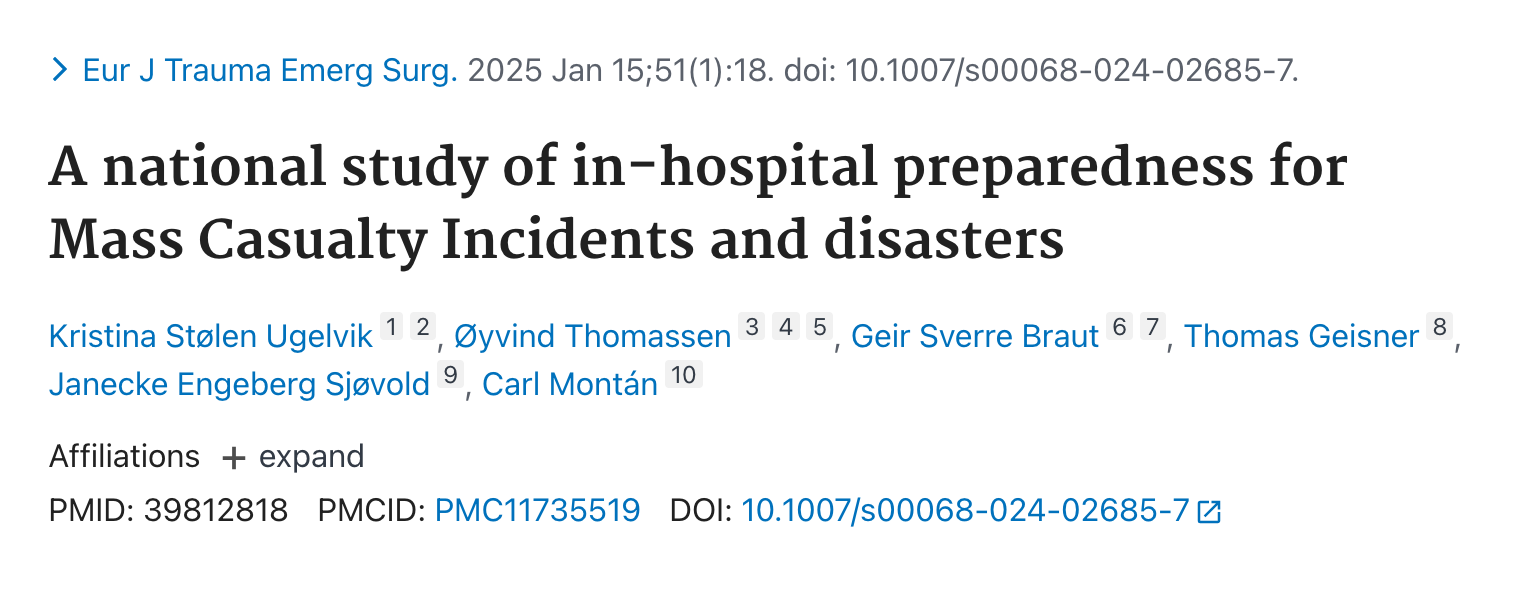
Norway is not a country you would typically associate with gaps in emergency preparedness: strong institutions, a mature civil protection culture, and serious investment in health system resilience across both the public and private sectors.
Which is what makes one Norwegian study we briefly referenced before worth reading carefully.
A national survey of Norwegian hospitals with trauma function found that while most had a designated preparedness role and a disaster preparedness committee, education and training for specific roles and functions was missing in most hospitals surveyed. Surge capacity and emergency storage were also identified as significant gaps. The study had an 87% response rate, covering nearly all trauma-capable hospitals in the country, so these are not marginal findings from a small sample.
The structure was there. The practiced capability was not.
The authors situate their findings against a backdrop that is difficult to ignore: the war in Ukraine, the evolving NATO Article 5 contingency landscape, and the growing cross-border coordination requirements within the EU health security framework. The message is not subtle. If a country like Norway carries these gaps, the question for the rest of Europe is not whether similar gaps exist elsewhere, but how wide they are.
This pattern is consistent with what our team observes across different health systems and geographies. The investment in preparedness infrastructure (plans, committees, designated roles, documented procedures) tends to outpace the investment in the human capability to activate and execute that infrastructure under pressure. The org chart exists. The muscle memory does not.
There is something else worth acknowledging here, and it requires a degree of honesty that institutional communications rarely allow. No hospital or health system will publicly state that it has preparedness gaps. And in most cases, that is the right instinct. There are good reasons not to broadcast operational vulnerabilities, and maintaining public confidence in health institutions is a legitimate concern.
But the reluctance to say it out loud does not make the gap disappear. It makes it quieter. And quiet gaps have a way of becoming visible at the worst possible moment.
The work still has to be done. The Norwegian study is valuable precisely because it says, clearly and with evidence, what most health system insiders already know but rarely commit to paper. Structural preparedness is not the same as operational readiness. Committees do not respond to emergencies. People do, people who have practiced, who know their role, and who have failed safely in a simulation before they are asked to succeed in a real event.
Rossow et al., A national study of in-hospital preparedness for Mass Casualty Incidents and disasters. European Journal of Trauma and Emergency Surgery, 2024.