
Why simulation is the most valuable tool in hospital preparedness
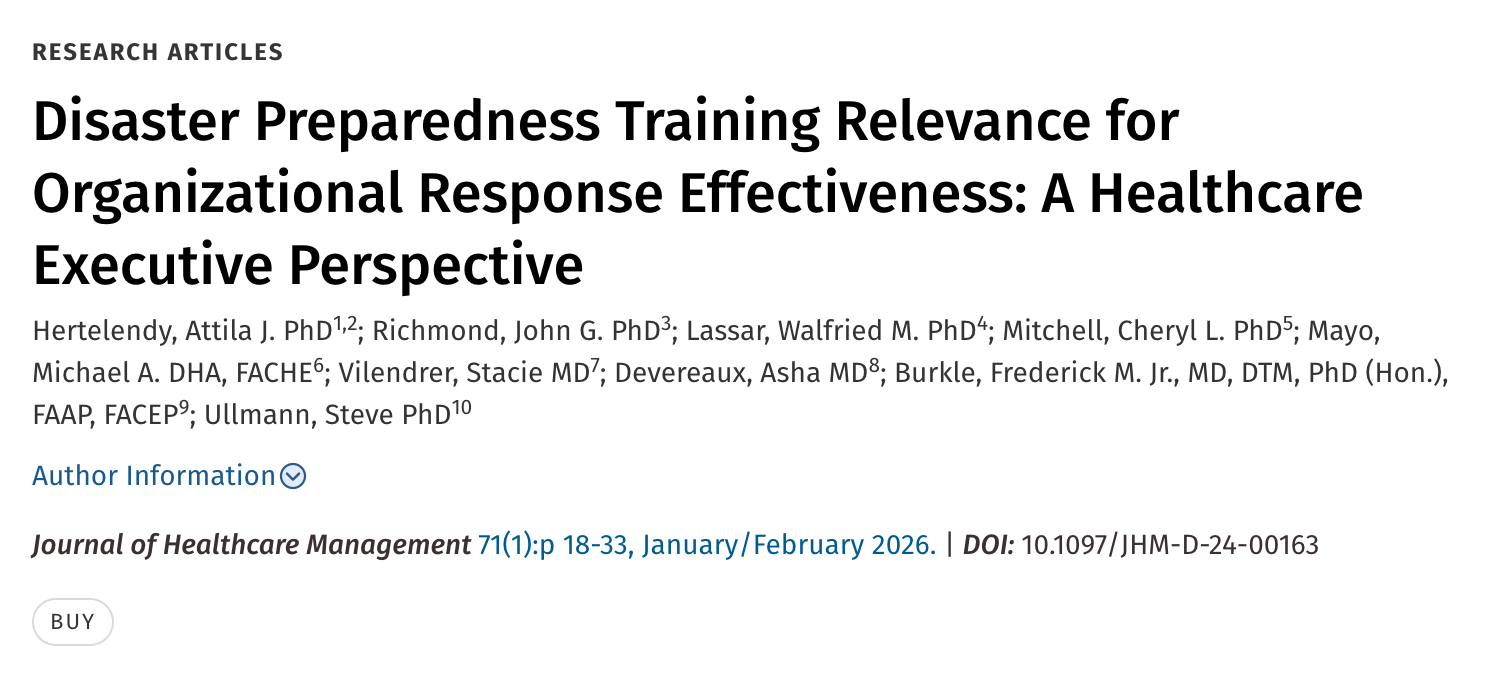
A study published earlier this year in the Journal of Healthcare Management surveyed healthcare executives on what type of disaster preparedness training they actually find relevant to their role.
The top answer was unambiguous: scenario-based training. Tabletop exercises and simulation. Not setting up emergency operations centers, not policy reviews, not documentation updates. Practicing decisions under pressure, in realistic conditions, with the people who would be in the room during an actual emergency.
The least relevant training, according to the same executives, was establishing an emergency operations center. The implication is clear: the infrastructure is not the problem. The gap is in the practiced capability to use it.
The study also identified a meaningful link between personal preparedness and organizational effectiveness. Executives who perceive themselves as personally prepared tend to lead more comprehensive and effective emergency responses. Preparedness investment, in other words, is as much a leadership question as an operational one. Confidence under pressure is not a personality trait — it is a skill that is built through repetition.
None of this is surprising to anyone who has spent time working on hospital preparedness in the field. What the study captures at the executive level, our team has observed consistently across all levels of hospital and emergency services staff. The appreciation for simulation-based training is not limited to leadership. Clinicians, nurses, administrative personnel, and emergency unit staff consistently rate exercises as the most useful preparedness activity they participate in — often noting that it is the first time they have had to think through their role under realistic pressure rather than in a classroom setting.
The plan is rarely the problem. The question is always whether the people responsible for executing it have ever actually practiced doing so — under stress, with incomplete information, and without the luxury of reading the document first.
Hertelendy et al., Disaster Preparedness Training Relevance for Organizational Response Effectiveness: A Healthcare Executive Perspective. Journal of Healthcare Management, 2026.