
Preparing for a Marathon: Germany's Hospitals Confront Wartime Scenarios
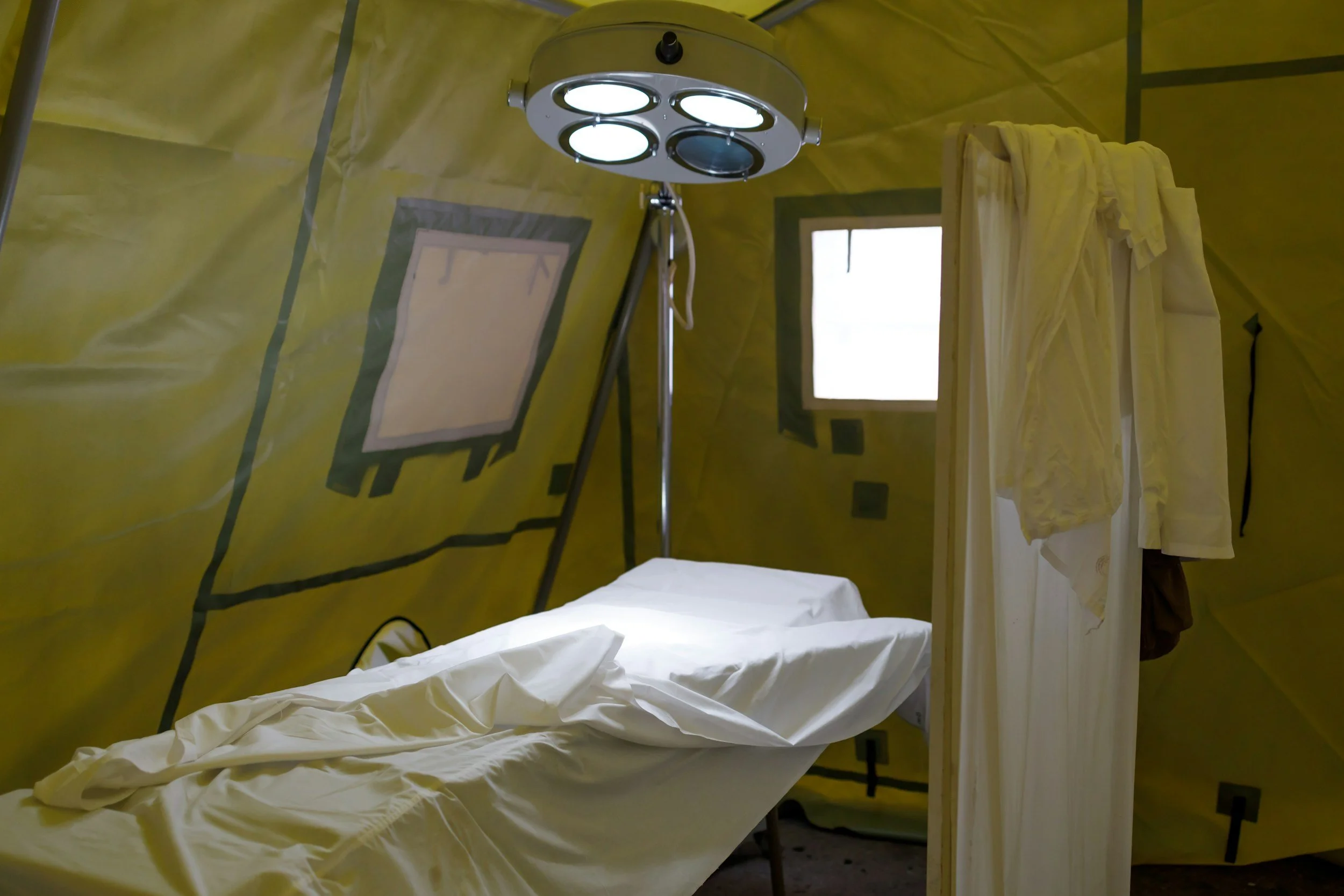
In Ulm, a Cold War-era military bunker built in 1979 to treat soldiers after a nuclear strike is being reconsidered for active use. It could hold 2,000 people for 90 days, but has sat empty for decades and would need several million euros in ventilation and power upgrades. That detail captures where German healthcare planning stands in September 2026
The Bundeswehr estimates a major NATO conflict could bring up to 1,000 wounded soldiers into Germany daily. Its five military hospitals would fill fast, leaving civilian hospitals to absorb most of the load, treating military and civilian patients together and running triage under conditions rarely practised today.
The gap, in Germany's own assessment
Benedikt Friemert, chief medical director of Ulm Military Hospital, was blunt: "Is our healthcare system prepared for this? The only answer is: No. What lies ahead of us is a marathon." Four structural weaknesses stand out:
Too few trauma-trained doctors. Only a few hundred physicians nationwide have experience with war-related injuries. Joint Bundeswehr-DGU courses using realistic surgical training can train just 50-100 surgeons a year, and demand is now outpacing that.
No shared real-time picture. Hospital capacity, medicines and specialist skills are tracked, if at all, hospital by hospital. As Bundestag health committee member Maria-Lena Weiss put it, Germany currently has "islands" that a planned Health Security Act would need to connect.
Thin, import-dependent supply chains. Hospitals typically hold six weeks of intensive-care medicines. Blood-clotting factors are especially constrained, since production from donated plasma can take up to a year.
A workforce that can vanish overnight. Supplier CSL estimates up to 20% of staff in some regions could be called up as reservists, a risk that extends to the truck drivers who deliver hospital supplies.
Full details are in UA.news's summary of the Bloomberg report.
What is already underway
Hardening buildings. Larger hospitals are exploring bullet-resistant glass, drone barriers and converting underground garages into shelters or treatment space.
Testing coordination. In March 2026, the Bundeswehr ran its largest medical exercise in decades, simulating casualties from an attack on Lithuania routed to hospitals in Berlin and Brandenburg. It went smoothly, though officials say civilian-military communication still needs work.
Local frameworks. Berlin already runs a "Civil Defense of Hospitals" plan covering 12 clinics, with defined roles and funding.
Rethinking stockpiles. PwC healthcare partner Michael Ey is advising hospitals to spread reserves of masks, medicines and vaccines across multiple sites rather than centralise them for efficiency: "That may be good for efficiency and minimizing tied-up capital, but that's not how resilience is built."
Borrowing from Ukraine
Germany's planning draws directly on Ukrainian hospitals' experience since 2022: moving patients to lower floors, barricading windows against blast glass, converting basements into treatment areas, and diversifying power with generators and solar panels after energy infrastructure came under attack. Kyiv anaesthesiologist Kateryna Bielka pointed to uncertainty itself as the hardest part to manage: "the high level of stress, lack of information, lack of understanding."
Why now
The push follows a rise in hybrid incidents inside Germany, including a drone carrying explosives intercepted near Leipzig Airport and a string of hospital cyberattacks. Defence Minister Boris Pistorius has warned Russia could be positioned to move against NATO territory by 2029, a timeline that would likely make Germany both a transit corridor for allied troops and a destination for their treatment.
A field note on the gap between plan and practice
A decommissioned bunker can be reactivated with money and engineering. Training more trauma surgeons, rebuilding decentralised stockpiles, and linking hundreds of independent hospitals into one real-time system are slower, structurally harder problems. The specific frictions Germany is confronting, fragmented data, thin peacetime-calibrated reserves, a shortage of specialists for a scenario few expected to need, and supply chains built for efficiency rather than redundancy, are not unique to wartime. They surface in other large-scale emergencies too. Germany's effort to close them, however incomplete, is a closely documented case of what that actually takes.